What Customers Check Online Before Visiting a Local Business
Finding a local business online has become easy.
A customer searches on Google, checks Maps, looks at a few photos, reads some reviews and,
sometimes within a couple of minutes, decides whether the business is worth visiting.
sometimes within a couple of minutes, decides whether the business is worth visiting.
That decision can happen without the business owner ever knowing that the customer was
considering them.
This is why a local business needs to think beyond simply appearing in search results.
What happens after someone finds you?
That is where the real decision starts.
A customer may be thinking:
Is this the place I need?
Does it look genuine?
Are the reviews good?
Is it open right now?
How much will it cost?
Can I actually find it easily?
Can I contact them before going?
Google's own Business Profile documentation describes a business profile on Search and Maps as an online listing that can show information such as location, contact details, website, hours, photos and reviews.
For a local business, these details are not just profile fields.
They are part of the customer's decision.
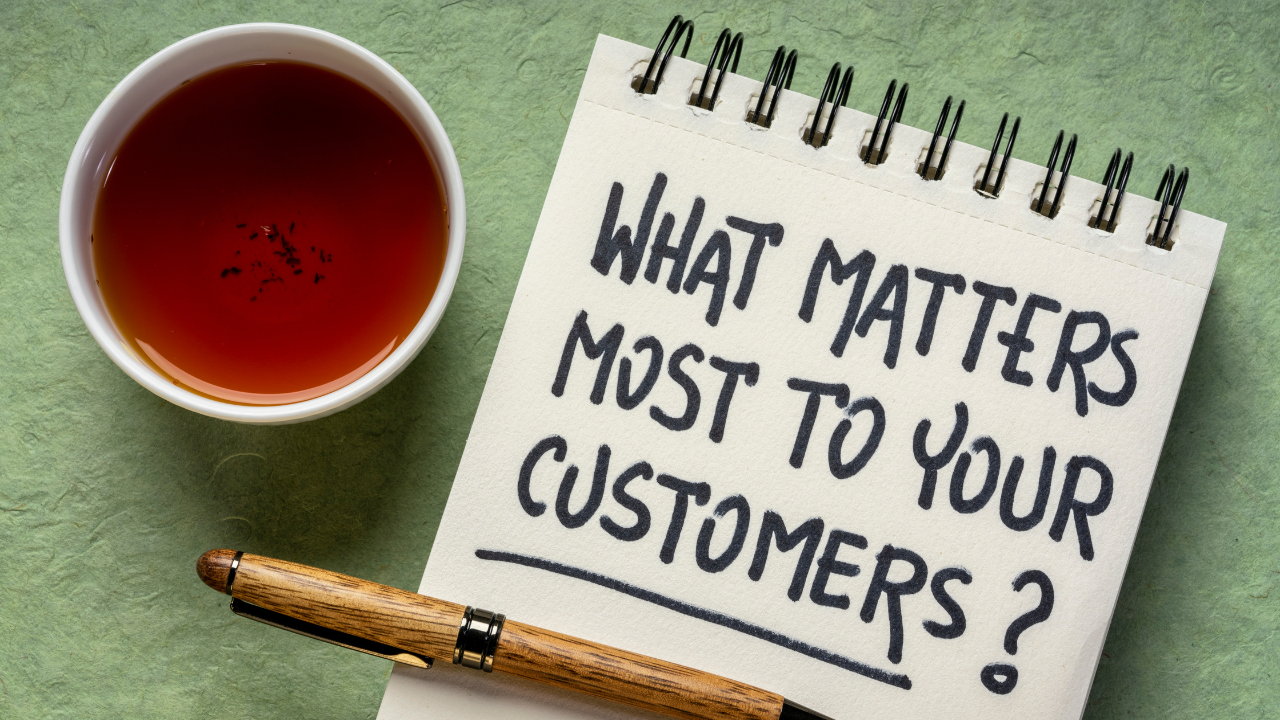
The Customer Usually Wants Answers, Not More Marketing
This is one of the easiest things for a business owner to forget.
When someone is searching for a local business, they are usually not looking for a beautifully
written brand story first.
They want answers.
If someone is looking for a salon, they may want to know whether the salon offers the service
they need.
If someone is looking for a furniture shop, they may want to see what kind of products are available.
If someone is looking for a restaurant, they may want to see the menu, location, photos and
reviews.
If someone needs an electrician, they may want to know whether the person serves their area and how to contact them.
The information changes by business, but the underlying question remains the same:
“Can I confidently choose this business?”
Your online presence should make that question easier to answer.
1. What Does This Business Actually Offer?
The first thing customers need to understand is whether your business is relevant to them.
That sounds obvious, but many local businesses make this harder than it needs to be.
A business name alone may not tell a new customer enough.
For example, imagine someone finds:
“Sharma Enterprises”
What does it sell?
Clothing?
Hardware?
Electrical products?
Stationery?
Building materials?
The customer should not have to guess.
Your online presence should clearly explain:
- What you sell
- What services you provide
- Who you serve
- What type of business you are
- What makes your offering different, if relevant
Google also recommends providing complete business information so customers can understand what you do, where you are and when they can visit.
This is particularly important for businesses with generic names.
2. Where Exactly Is the Business?
Once a customer knows that your business might be useful, the next question is usually practical:
“Where is it?”
Customers may check your:
- Full address
- Google Maps location
- Map pin
- Nearby landmarks
- Storefront photos
- Service area
- Directions
For a physical store, this information can make the difference between a visit and a skipped opportunity.
A customer may be willing to travel ten minutes to one shop but not twenty minutes to another.
And if the location information looks confusing, they may not take the risk.
Google allows businesses to maintain information such as address, service area and location through their Business Profile.
So check your own listing from a customer's point of view.
Does the map pin make sense?
Is the address written clearly?
Would someone who has never visited your area be able to find you?
Those are more useful questions than simply asking whether your address is technically present.
3. Are the Opening Hours Correct?
This is one of those small details that can create a very big problem when it is wrong.
Imagine a customer finds your store on Google at 6:30 PM.
Google says you're open until 8 PM.
They travel to your shop.
The shutters are down.
That customer may not try again.
Google provides businesses with options for regular hours as well as special hours for
temporary changes such as holidays or events.
So don't treat opening hours as something you set once and forget.
Check them when:
- Your working hours change
- You move to a new location
- You change weekend timings
- You close for holidays
- Your seasonal schedule changes
And remember that customers may search specifically for businesses that are open at the time they need them.
4. What Do the Reviews Say?
Most customers understand that no business will have a perfect record.
What they want to know is what other customers experienced.
They may read a few recent reviews before deciding.
Sometimes they will pay more attention to the written comments than the overall star rating.
For example, a customer may notice repeated comments about:
- Product quality
- Staff behaviour
- Waiting time
- Cleanliness
- Service quality
- Delivery
- Pricing
- After-sales support
Google says customer reviews can provide helpful feedback and that replying to reviews shows customers that the business values their feedback.
This is why simply collecting reviews is not the whole job.
Read them.
Look for patterns.
Respond where appropriate.
And pay attention when several customers are mentioning the same issue.
Sometimes your reviews tell you more about your customer experience than your own
marketing does.
5. Are the Photos Real and Useful?
A customer may know the name of your business and still have no idea what it looks like.
That is where photos help.
For a local business, useful photos could include:
- Exterior of the shop
- Entrance
- Interior
- Products
- Work samples
- Team
- Service environment
- Important facilities
- Signboard
- Different areas of the premises
Google specifically recommends business photos and notes that an exterior photo can help customers recognise the business when they arrive.
That last point is easy to overlook.
Photos are not only about making a profile attractive.
They can also answer a very practical question:
“How will I know I've reached the right place?”
This is especially useful when a shop is inside a market, building, complex or crowded
commercial area.
6. What Products or Services Are Available?
A customer does not want to make the journey and discover that you don't provide what they came for.
Before visiting, they may check your:
- Service list
- Product categories
- Menu
- Catalogue
- Portfolio
- Available brands
- Specialities
- Appointment options
The more specific the customer's need, the more important this becomes.
Someone searching for “salon” has a broad requirement.
Someone searching for “bridal makeup artist near me” has a much more specific one.
The online information should reflect that difference.
You don't necessarily need a huge website with dozens of pages.
You do need enough information to tell the right customer:
“Yes, we provide that.”
7. Can I Get an Idea of the Price?
Price is often one of the questions customers hesitate to ask directly.
Instead, they may search online first.
Depending on the business, they might look for:
- Product prices
- Starting prices
- Service packages
- Price ranges
- Consultation fees
- Menu prices
- Offers
- Quotation information
Not every business can publish a fixed price.
A wedding photographer, interior designer or contractor, for example, may need to understand the customer's requirements before giving a final quote.
That's fine.
But even then, you can explain how pricing works.
For example:
“Packages start from ₹X. Final pricing depends on location, duration and requirements.”
That is much more helpful than giving the customer no information at all.
The point is not to make every business publish every price.
The point is to remove avoidable uncertainty.
8. Is There a Website I Can Check?
Some customers are satisfied with a Google Business Profile.
Others want more information.
They may click through to the website to understand:
- The business
- Products
- Services
- Pricing
- Portfolio
- About section
- Contact details
- Booking process
- Ordering options
Google itself allows businesses to add a website to their Business Profile and use the profile to help customers learn more about the business.
Think of it this way:
Google helps people find you.
Your website can help them understand you.
That distinction matters.
A local business doesn't necessarily need a complicated website.
It needs a useful place where customers can get the information that does not fit comfortably into a search listing.
9. Can I Contact the Business Easily?
Sometimes the customer is interested but still has one small question.
“Do you have this colour?”
“Are appointments available tomorrow?”
“Do you deliver here?”
“Can I get a quotation?”
“Is this product currently available?”
If contacting the business requires too much effort, the customer may simply move on.
Make sure your important contact information is easy to find.
That could be:
- Phone
- Website contact form
- Booking link
- Other relevant messaging options
Google's current Business Profile tools include options for managing contact information,
website and, in eligible cases, messaging and action links.
You don't have to offer every channel.
Just make the next step obvious.
10. Does the Business Look Active?
There is a difference between an old online listing and an active business presence.
A customer might notice that:
- The latest photos are several years old
- The website has old offers
- The social page has not been updated
- Opening hours look questionable
- Products shown online are no longer available
- Contact details appear inconsistent
This can create doubt even if the business itself is perfectly good.
Google says businesses can update information such as hours, contact information, address and photos to keep their Business Profile accurate and up to date.
You don't need to constantly post just to look busy.
But important information should not look abandoned.
11. What Are Other Customers Actually Saying About the Experience?
This is slightly different from simply checking the rating.
Imagine two businesses both have a 4.5-star rating.
One has reviews saying:
“Good quality, helpful staff and quick service.”
The other has reviews saying:
“Good products, but the waiting time was very long.”
Those businesses may look similar from the rating alone.
The written reviews provide context.
Customers can also encounter photos uploaded by other visitors. Google notes that
customers can post photo updates to Business Profiles, including images showing products, seasonal menus or changes at a business.
That means your online reputation isn't created only by what you publish.
Customers contribute to it too.
That is another reason the real-world experience matters.
12. Does Everything Match?
This is one of the most underrated parts of a local business presence.
Suppose your Google profile says:
10 AM – 8 PM
Your website says:
9 AM – 9 PM
Your Instagram bio says:
11 AM – 7 PM
Which one should the customer believe?
Or suppose your Google listing has one phone number and your website has another.
The customer may not spend time investigating.
They may simply choose a business that looks easier to deal with.
Google's Business Profile tools even include a Profile Strength indicator that helps businesses identify missing information and maintain consistency across Google services.
The same principle should apply beyond Google.
Your important business information should be reasonably consistent across your main online channels.
13. Can I Understand the Business Without Calling First?
This is where many small businesses can improve.
Owners often know their business so well that they forget what a new customer doesn't know.
You might think:
“Everyone knows what we do.”
But a first-time customer doesn't.
Ask yourself:
If someone discovered my business today, could they understand the basics without calling me?
Could they find:
- What we offer?
- Where we are?
- When we're open?
- What the place looks like?
- What customers say?
- How much things roughly cost?
- How to contact us?
If the answer is yes, you're already removing a lot of friction.
14. Customers Compare You With Other Businesses
This is the uncomfortable part.
Your customer is rarely looking at your business in isolation.
They may open three or four Google results.
They may compare photos.
They may look at reviews.
They may visit different websites.
They may compare prices.
They may check which business seems easier to reach.
They may even send a WhatsApp message to two businesses and see who responds first.
You may never know that this comparison happened.
But it happens.
That's why the goal shouldn't be:
“How do I make my business look perfect?”
A better goal is:
“How do I make choosing my business easy?”
A Simple Pre-Visit Checklist for Local Businesses
Take five minutes and search for your own business.
Now pretend you are a customer who has never heard of you before.
Check these things:
Business information
- Is the business name correct?
- Is the category clear?
- Is the description useful?
Location
- Is the address accurate?
- Is the map pin correct?
- Can someone recognise the storefront?
Hours
- Are regular hours correct?
- Are weekend hours correct?
- Are special/holiday hours updated?
Reviews
- Are there recent reviews?
- Are you responding to them?
- Are customers repeatedly mentioning the same problem?
Photos
- Are the photos real?
- Can customers see the storefront?
- Can they understand your products or services?
Products and services
- Is it obvious what you offer?
- Are important services missing?
- Is the information current?
Pricing
- Can customers get some idea of cost?
- If you don't publish prices, do you explain how to get a quote?
Website
- Does the website work on mobile?
- Is the information current?
- Is there a clear way to contact or buy/book?
Contact
- Is the phone number correct?
- Is there a clear enquiry option?
- Does someone actually respond?
This exercise can reveal problems that are difficult to notice when you're looking at your business as the owner.
What Businesses Should Not Do
There is also a temptation to over-optimise every little thing.
Don't fill your profile with unnecessary keywords.
Don't use fake photos.
Don't create misleading offers.
Don't hide important conditions.
Don't encourage customers to leave reviews that do not reflect their genuine experience.
And don't try to make every part of your online presence sound like advertising copy.
Customers can tell when information is written for them and when it is written only to
promote the business.
Clear information usually works better.
Your Online Presence Should Match the Real Experience
There is one final point that matters more than all the profile optimisation in the world.
Your online presence makes a promise.
Your physical business has to deliver it.
If your photos show a clean and organised store, the actual store should feel that way.
If your website says you provide a particular service, the service should actually be available.
If customers repeatedly praise quick service in reviews, that experience should remain consistent.
Online trust is easier to build when it reflects something real.
Otherwise, a good-looking online presence may get the customer through the door once—but it won't necessarily bring them back.
Frequently Asked Questions
What do customers check online before visiting a local business?
Most customers are looking for practical information: location, opening hours, products or services, reviews, photos, pricing information, website details and a way to contact the business. The exact order depends on the type of business and what the customer is looking for.
Do customers really check photos before visiting?
Many do, particularly when the appearance or physical environment matters. Photos can help customers understand the storefront, products, interiors and services. Google specifically recommends business photos and says exterior photos can help customers recognise the business when they visit.
How important are online reviews for a local business?
Reviews are an important source of customer feedback and social proof. Customers can read both the rating and written experiences, while businesses can respond to reviews and address concerns publicly.
Should a local business have a website?
A website can be useful when customers need more information than a search listing provides. It can give you a dedicated place for services, products, pricing information, portfolio, FAQs and contact or booking options.
What if my business cannot publish prices online?
You don't have to publish a fixed price if your pricing genuinely depends on the customer's requirements. Instead, explain the pricing process, provide starting prices or ranges where appropriate, and tell customers how they can request a quotation.
How often should I check my Google Business Profile?
There is no need to change it every day. But you should review it whenever important business information changes and periodically check that your hours, contact details, location, photos and other important information are still accurate. Google provides tools for businesses to update these details.
Can customers see information that I did not add myself?
Yes. Google says Business Profile information can come from multiple sources, including the business owner, publicly available information, third-party data and user contributions such as reviews and photos.
What is the biggest thing customers want before visiting?
Usually, it comes down to confidence. They want enough reliable information to feel that the business is relevant, genuine, accessible and worth their time.
Conclusion
A customer doesn't need to spend an hour researching a local business.
Sometimes they need only two or three minutes.
But in those few minutes, they can form a surprisingly strong opinion.
They can see your location.
They can check your hours.
They can look through your photos.
They can read reviews.
They can compare your services and prices.
They can visit your website.And they can decide whether to call, visit—or keep searching.
That is why a local business should think about its online presence from the customer's side, not just the owner's side.
Don't ask only, “Am I visible online?”
Ask:
“If a new customer finds me today, do I give them enough reasons to choose me?”
That is a much more useful question.
A Futkar Pocket Website or Online Shop can give customers a simple place to learn more about your business, explore your offerings and take the next step after discovering you through Google, Maps or social media.
Ready to grow your business online?
Create your Pocket Website & Digital VCard free with Futkar.
Start Free Today