UPI vs Cash: What Should Small Businesses Offer Customers?
Compare UPI vs cash for small businesses in India. Explore convenience, costs, security, customer preferences, and the benefits of offering both payment methods.
Futkar Team·21 Oct 2026·5 min read
UPI vs Cash: What Should Small Businesses Offer Customers?
A customer visits a local grocery shop and pays ₹150 through UPI. The next customer purchases the same items but prefers cash. Both transactions are simple, yet they highlight an important question for small business owners: should businesses prioritise digital payments or continue accepting cash?
UPI has become a familiar payment method across India, offering customers a convenient alternative to physical money. However, cash remains useful, particularly for customers who prefer traditional transactions or have limited access to digital banking.
For small businesses, the decision is not necessarily about choosing one over the other. It is about understanding how each payment method affects customer convenience, operating costs, and daily sales.
1. Understanding UPI and Cash Payments
UPI, or Unified Payments Interface, enables instant bank-to-bank payments through supported applications. Customers can scan merchant QR codes or use other supported payment methods to transfer money.
Cash payments involve exchanging physical currency directly between customers and businesses.
Both methods have practical advantages, but their usefulness depends on the business environment.
A busy café may benefit from QR-based payments, while a small roadside vendor might prefer accepting both cash and UPI to accommodate different customers.
2. UPI vs Cash: Key Differences
Factor UPI Payments Cash Payments Convenience | Requires a supported payment method | Requires physical currency Transaction speed | Usually quick when systems work | Quick when exact change is available Record keeping | Electronic transaction history | Requires manual recording Internet dependency | Usually needs connectivity | Works without internet Security concerns | Fraud, incorrect transfers, payment scams | Theft, loss, counterfeit notes Payment confirmation | Verified through bank or merchant records | Confirmed by receiving cash Customer access | Requires eligible banking/payment access | Accessible without digital banking
Neither payment method is perfect. Their strengths become clearer when businesses consider actual customer needs.
3. Why UPI Is Useful for Small Businesses
UPI reduces several everyday challenges associated with handling physical money.
Customers can pay without carrying exact change, and merchants can receive payments directly into their linked accounts.
A small stationery shop, for example, may find QR payments particularly useful during busy school hours when many customers make low-value purchases.
UPI also provides transaction records that can support payment reconciliation and basic financial tracking.
However, merchants should verify successful payments using trusted banking or merchant applications. A customer displaying a payment screenshot does not necessarily mean the transaction has been completed.
4. Why Cash Still Matters
Despite the growth of digital payments, cash continues to serve important purposes.
Some customers may not use smartphones, have reliable connectivity, or feel comfortable making digital transactions.
Cash is also useful when banking applications experience technical problems.
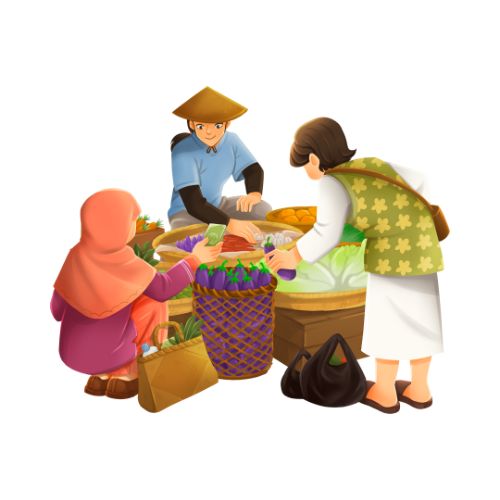
Consider a neighbourhood vegetable seller operating in an area with inconsistent mobile connectivity. Accepting cash allows the business to continue serving customers even when UPI payments are temporarily unavailable.
Cash also provides immediate physical access to funds, although merchants must manage storage, counting, and depositing responsibilities.
5. What About Transaction Costs?
Payment costs deserve attention, especially for businesses operating with narrow margins.
Cash payments may appear free, but counting money, arranging change, transporting deposits, and managing losses can create indirect expenses.
UPI payments may reduce some of these costs, but merchants should not assume every digital payment arrangement is free.
Charges can vary depending on the payment provider, transaction type, merchant classification, and additional services used.
For businesses accepting payments through payment gateways or other commercial solutions, reviewing current pricing terms is essential.
The most economical option depends on transaction volumes and how the business operates.
Under the framework announced by the Ministry of Finance in September 2026, UPI merchant payments up to ₹2,000 and qualifying small-merchant transactions remain exempt from MDR. Certain higher-value merchant payments fall under the new charging framework, although implementation timelines have been subject to change.
Press Information Bureau
+1
Businesses should confirm the latest applicable charges with their payment provider.
6. Which Payment Method Is Safer?
Both UPI and cash involve different risks.
Cash can be lost, stolen, or accidentally miscounted. UPI reduces physical cash handling but introduces risks such as fraudulent payment requests, incorrect transfers, and misleading payment screenshots.
Merchants should check successful UPI transactions through their bank or payment provider and never share confidential credentials.
NPCI advises users to protect their UPI PINs and provides official channels for transaction complaints.
NPCI
7. Why Offering Both Is Often the Better Choice
For most small businesses, accepting both UPI and cash is a practical approach.
A local grocery store can display a merchant QR code at checkout while keeping cash available for customers who prefer it.
This approach helps businesses:
Accommodate different customer preferences.
Reduce dependence on a single payment method.
Continue selling during connectivity problems.
Make checkout more convenient.
Businesses should review which methods customers actually use rather than assuming everyone prefers digital payments.
Frequently Asked Questions (FAQs)
1. Is UPI better than cash for small businesses?
UPI offers convenient digital payments and electronic transaction records, while cash works without internet connectivity. Offering both is often more practical than relying on one.
2. Are UPI payments free for every merchant?
Not necessarily. Charges depend on applicable rules, merchant classification, transaction value, and provider services. Businesses should check current terms.
3. Can a small shop accept UPI without a card machine?
Yes. A supported merchant QR code allows customers to make UPI payments without a traditional card terminal.
4. What should a business do if a UPI payment fails?
Check the transaction status through the official banking or merchant application. Avoid requesting a second payment until the status is clear, and contact the payment provider if necessary.
Conclusion
UPI and cash serve different customer needs. While UPI offers digital convenience and easier transaction tracking, cash remains a reliable alternative when connectivity or digital access is limited.
Small businesses can benefit from offering both methods while building a clearer digital presence. Platforms like Futkar can support business visibility through Pocket Websites, Online Shops, and Smart QR Codes, alongside payment services provided by banks or supported UPI providers.
Ready to grow your business online?
Create your Pocket Website & Digital VCard free with Futkar.